
Standard Transmission Repairs/Replacement Procedures For European Vehicles
Rob Newhouse • February 10, 2024

February 10, 2024

Your European car is more than just a means of transportation – it’s a statement of style and class, requiring special attention and maintenance. One of the critical components that you should never neglect is the transmission. Your vehicle’s transmission is responsible for transmitting power from the engine to the wheels, and like any other mechanical system, it can wear out or break down over time. If you’re experiencing transmission problems, don’t panic. We’ll explore some common transmission repairs/replacement procedures for European vehicles.

Fluid And Filter Replacement

Transmission fluid and filter replacement is a routine service that helps keep your car’s transmission running smoothly. It’s recommended that you have your transmission fluid and filter changed every 30,000 to 60,000 miles, depending on the make and model of your vehicle. Neglecting to change your transmission filter and fluid can lead to transmission slippage, harsh shifting, and even failure. The good news is that this repair is relatively inexpensive and can be done quickly at most auto repair shops.

Clutch Replacement

If you drive a manual transmission, you’re probably familiar with the clutch pedal. The clutch disengages the engine from the transmission, allowing you to shift gears. Over time, the clutch can wear out, making shifting difficult or impossible. If you’re experiencing slipping, grinding, or difficulty shifting, it may be time to replace your clutch. A professional transmission technician will remove and replace the worn clutch disc, pressure plate, and throw-out bearing.

Solenoid Replacement

Modern transmissions rely on solenoids to control the flow of transmission fluid and engage different gears. If one or more solenoids fail, your car may experience shifting problems, rough idle, and other issues. Solenoid replacement involves removing the transmission oil pan, locating the faulty solenoid, and replacing it with a new one. This repair job can take several hours, but it’s essential for keeping your car running smoothly.

Complete Transmission Replacement

In some cases, a transmission repair may not be enough to fix the problem. If your transmission is severely damaged, it may need to be replaced entirely. A complete transmission replacement involves removing and replacing the old transmission with a new or rebuilt one. It’s a complex, time-consuming process that requires specialized tools and expertise. However, a new transmission can give your car a new lease of life and is often more cost-effective than repairing an old, failing transmission.

Keeping your European car’s transmission in top condition requires regular maintenance, timely repairs, and professional expertise. If you’re experiencing transmission problems, don’t hesitate to contact a professional auto repair shop. They can help identify and fix the problem, prolonging the life of your vehicle and keeping you on the road. Whether it’s a fluid and filter change, a clutch replacement, a solenoid repair, or a complete transmission replacement, a professional transmission technician has the knowledge and tools to get your car back to its top-performing condition.

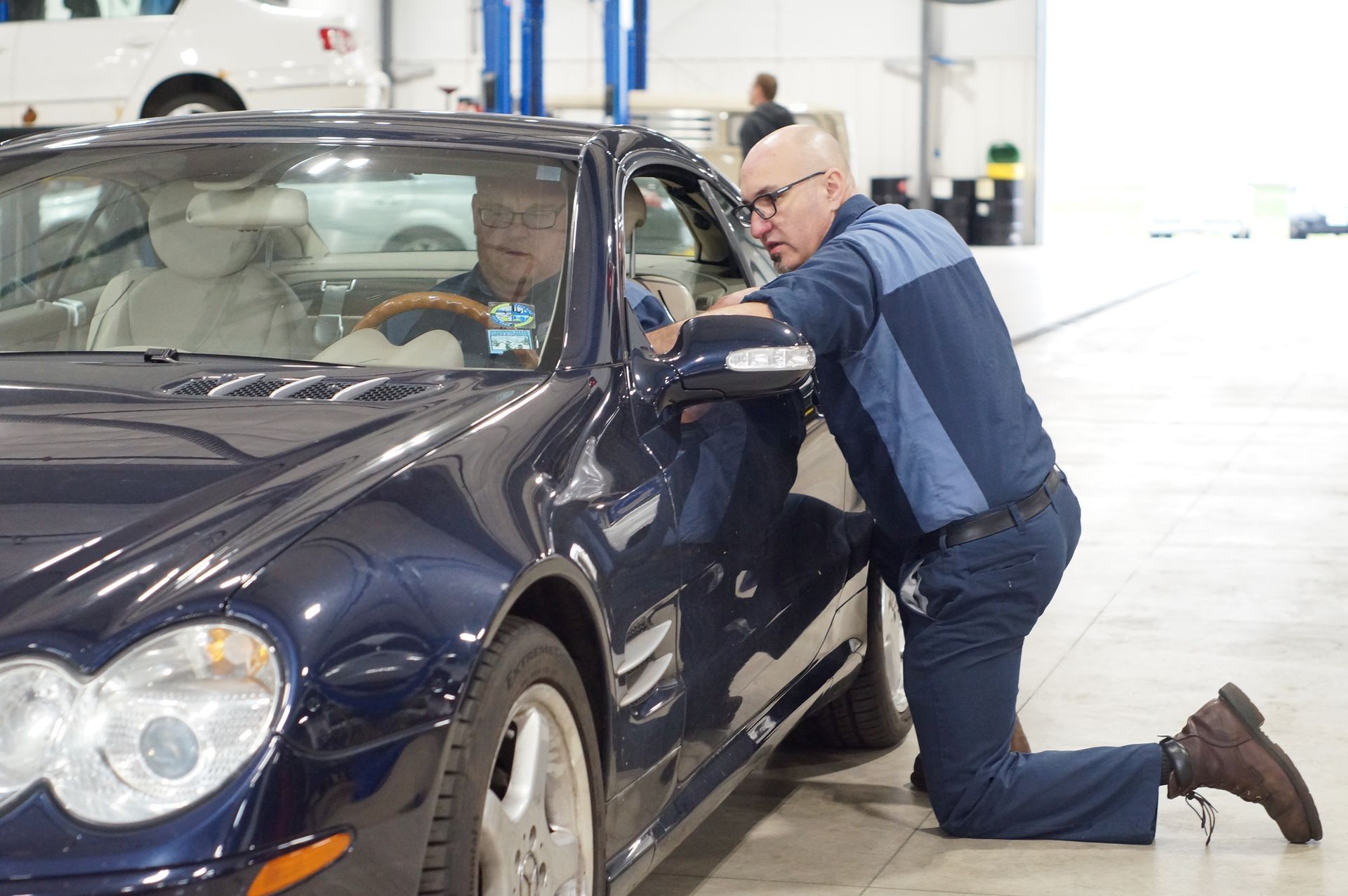
Mechanic kneeling, looking at driver in blue car. Shop setting, two men.
August 18, 2026
Recognize early transmission warning signs and perform regular maintenance to avoid unexpected breakdowns and expensive auto repairs.

auto service
August 18, 2026
Do you need to get your brakes replaced? Are you struggling with tire concerns? Here's how auto service can address these important areas and keep you safe!
mercedes repair
July 13, 2026
From specialized Audi care to Mercedes repair, expert mechanics matter. Discover five advantages of professional Audi repair over general service.
Show More →